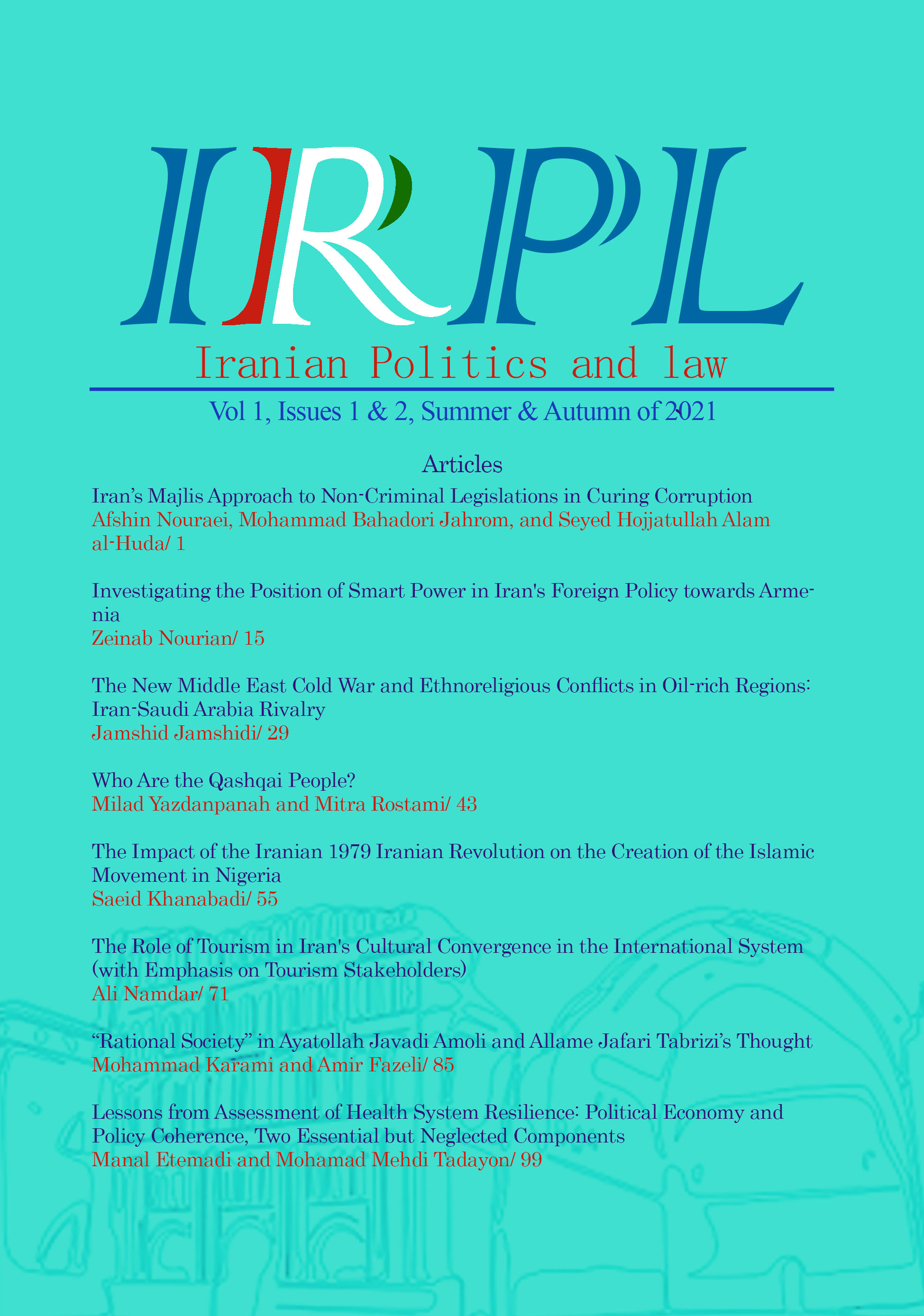
Resilience of health systems is referred to the capacity to prepare and respond effectively to crises, while maintaining the key functions. Designing a tool that can measure the conceptual structures of the definition of resilience at the level of the health system, is a necessary step to take action to address the shortcomings. We developed the quantitative scale based on the comprehensive Kruk framework and added two novel items to its awareness dimension. The study proposes some facets to be considered in the scale such as political economy of the health system, network governance, policy coherence and discussed their necessities. The need to change the paradigm from traditional forms of health system governance to network governance to promote its resilience in the face of crisis is of particular importance. Network governance is a platform for policy coherence in government decisions at the time of epidemics that improves the resilience of the health system in the face of crisis. Innovating in financing and purchasing function, including targeting health system subsidies towards health prevention and promotion in disadvantaged areas and among vulnerable groups is a driving force for resilience.
Etemadi, M., & Tadayon, M. M. (2021). Lessons from Assessment of Health System Resilience: Political Economy and Policy Coherence, Two Essential but Neglected Components. Iranian Politics and Law Quarterly, 1(1), 99-110.
MLA
Etemadi, M., & Tadayon, M. M. "Lessons from Assessment of Health System Resilience: Political Economy and Policy Coherence, Two Essential but Neglected Components", Iranian Politics and Law Quarterly, 1, 1, 2021, 99-110.
HARVARD
Etemadi M., Tadayon M. M. (2021). 'Lessons from Assessment of Health System Resilience: Political Economy and Policy Coherence, Two Essential but Neglected Components', Iranian Politics and Law Quarterly, 1(1), pp. 99-110.
CHICAGO
M. Etemadi & M. M. Tadayon, "Lessons from Assessment of Health System Resilience: Political Economy and Policy Coherence, Two Essential but Neglected Components," Iranian Politics and Law Quarterly, 1 1 (2021): 99-110,
VANCOUVER
Etemadi M., Tadayon M. M. Lessons from Assessment of Health System Resilience: Political Economy and Policy Coherence, Two Essential but Neglected Components. IRPL. 2021;1(1):99-110.