Some scholars describe the ongoing regional stiff rivalry between Iran and Saudi Arabia in the Middle East as a cold war that resembles the Cold War between the United States and the Soviet Union. This rivalry shapes real political, military, and economic dynamics in the region. Although in the post-Iraq invasion in 2003 there are ample discussions on different dimensions of rivalry between Iran and Saudi Arabia, one aspect that has received little attention is how this rivalry affects ethnoreligious conflicts at the domestic level within the two countries. This study uses the study of the Arabic-speaking minority in Iran's Khuzestan province and the Shia minority in Saudi Arabia's Al Sharqia province to illustrate how the rivalry creates a new force that impacts the internal dynamism of mobilization among these minorities. This is despite the fact that these regions produce most of the oil in the Middle East and may suffer the consequences of the resource curse. Therefore, the main question is: How does this rivalry between Iran and Saudi Arabia affect the ethnoreligious cleavages in the oil-rich region of the two countries? I argue that the approach of the governments of Saudi Arabia and Iran to their regional rival has internal consequences for religious and ethnic minorities in these two countries that pave the way for extremist’s groups to lead the mobilization in these regions. As a result, the two regions have a high potential for the formation of crisis centers and can foster extremism.
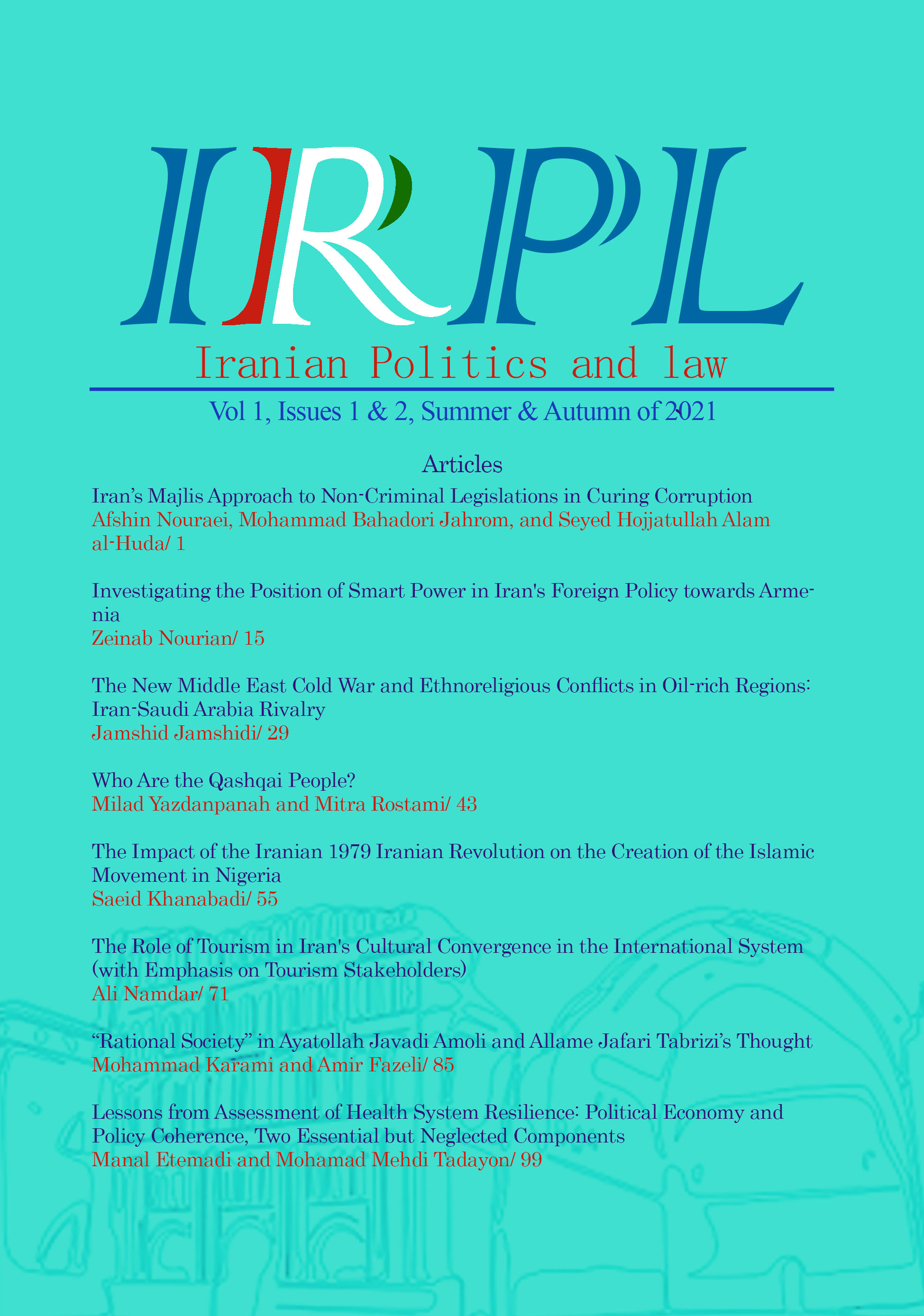
Jamshidi, J. (2021). The New Middle East Cold War and Ethnoreligious Conflicts in Oil-rich Regions: Iran-Saudi Arabia Rivalry. Iranian Politics and Law Quarterly, 1(1), 29-42.
MLA
Jamshidi, J. "The New Middle East Cold War and Ethnoreligious Conflicts in Oil-rich Regions: Iran-Saudi Arabia Rivalry", Iranian Politics and Law Quarterly, 1, 1, 2021, 29-42.
HARVARD
Jamshidi J. (2021). 'The New Middle East Cold War and Ethnoreligious Conflicts in Oil-rich Regions: Iran-Saudi Arabia Rivalry', Iranian Politics and Law Quarterly, 1(1), pp. 29-42.
CHICAGO
J. Jamshidi, "The New Middle East Cold War and Ethnoreligious Conflicts in Oil-rich Regions: Iran-Saudi Arabia Rivalry," Iranian Politics and Law Quarterly, 1 1 (2021): 29-42,
VANCOUVER
Jamshidi J. The New Middle East Cold War and Ethnoreligious Conflicts in Oil-rich Regions: Iran-Saudi Arabia Rivalry. IRPL. 2021;1(1):29-42.